
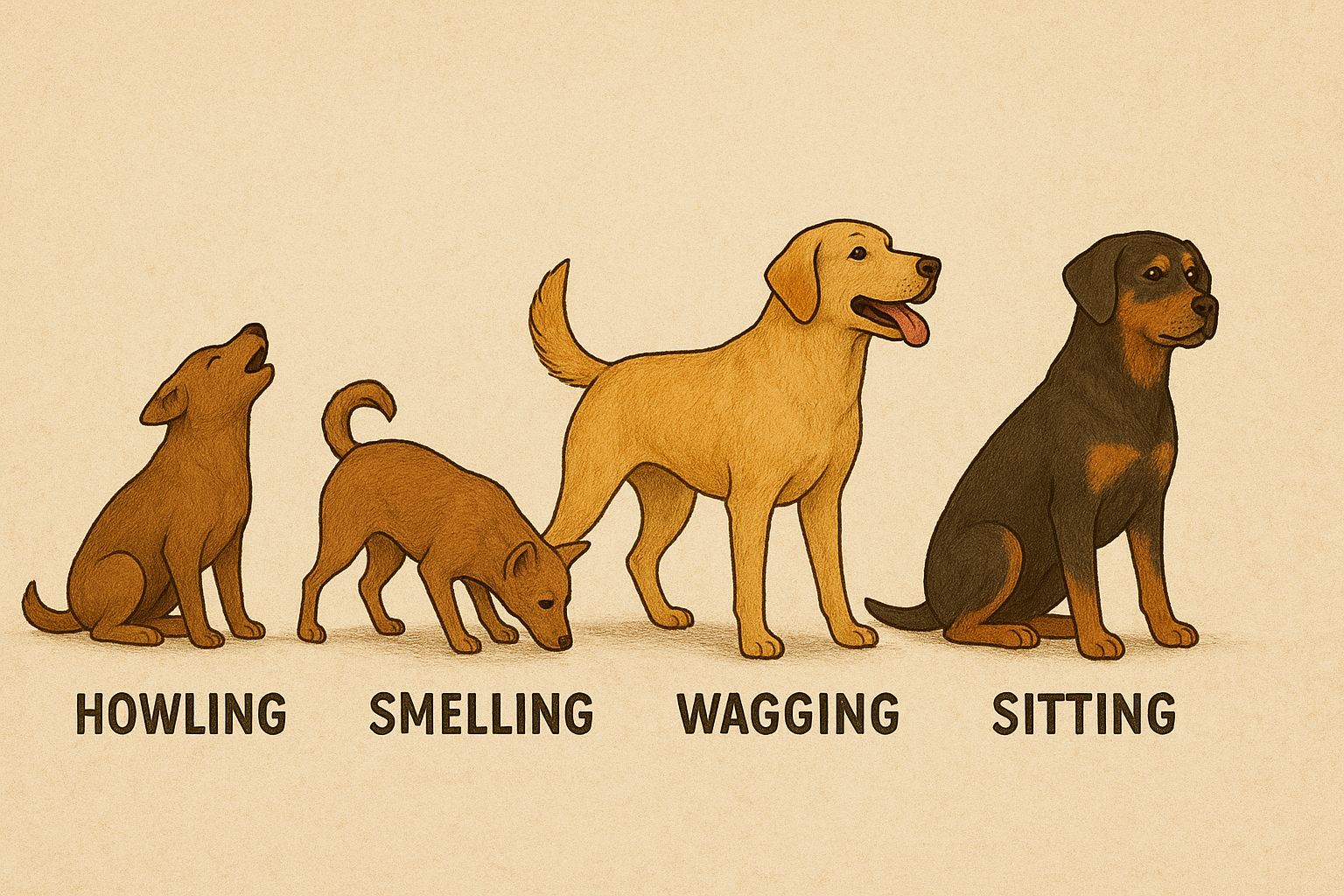
Dog behaviour patterns with humans are unique and fascinating. Dogs don’t just live with us — they form strong emotional connections, respond to our feelings, and adapt to our lifestyle. Understanding these behaviours helps us create an even stronger bond with our furry companions.
Dogs have lived alongside humans for thousands of years, and during this time, they’ve developed specific behaviour patterns that reflect affection, loyalty, communication, and social bonding. Below are the key behavioural patterns dogs typically show with humans:
1.Affectionate Behaviours
Tail Wagging – A wagging tail usually signals excitement, happiness, or friendliness (though the speed and direction matter—fast wag = joy, stiff wag = alertness).
Licking (Face/Hands) – Dogs lick humans to show affection, submission, or sometimes to seek attention.
Cuddling & Leaning – Pressing their body against humans is a sign of trust and comfort.
Eye Contact – Dogs gaze into human eyes to bond emotionally; this increases oxytocin for both.
2.Protective Behaviours
Alert Barking – Dogs bark or growl to warn their owners about strangers, danger, or unusual sounds.
Guarding Behaviour – They may position themselves between the human and a perceived threat.
Following Everywhere – Dogs shadow humans around the house as a way of protecting and staying connected with their “pack leader.”
3.Playful Behaviours
Play Bow (Front legs down, tail up) – An invitation to play, unique to dogs.
Fetching & Tugging – Interactive play strengthens the human-dog bond.
Zoomies (running in circles quickly) – A burst of excitement often shared with humans.
4.Dependency and Attachment
Separation Anxiety – Dogs often whine, bark, or act restless when their human leaves, showing deep attachment.
Sleeping Near Humans – They prefer sleeping next to humans for warmth, security, and bonding.
Bringing Toys or Objects – A way of sharing, inviting humans into their world.
5.Communication Patterns
Body Language Reading – Dogs observe human facial expressions, tone of voice, and gestures to respond appropriately.
Mimicking Human Routines – They often adjust their schedule (sleeping, waking, eating) to match their owner’s lifestyle.
Vocal Communication – Whining, barking, or even “talking” sounds are directed specifically to interact with humans.
6.Emotional Sensitivity
Comforting When Sad – Many dogs nuzzle, lick, or stay close when they sense their human is upset.
Excitement at Reunion – Tail wagging, jumping, and licking when humans return home.
Shared Stress Response – Dogs can feel their owner’s stress or happiness and mirror those emotions.
Dog behaviour patterns with humans are built on affection, loyalty, protection, play, dependency, communication, and emotional bonding. Unlike most animals, dogs don’t just live with humans—they live for humans, adapting their behaviour to match our emotions and routines.
Pingback: 🐾 When Dogs Sleep Peacefully - Signs and Benefits petsindiahub.in
Pingback: Why Do Dogs Damage Their Beds? 🐾🛏️ - petsindiahub.in
Pingback: What Dogs Think About Their Bed: - petsindiahub.in